


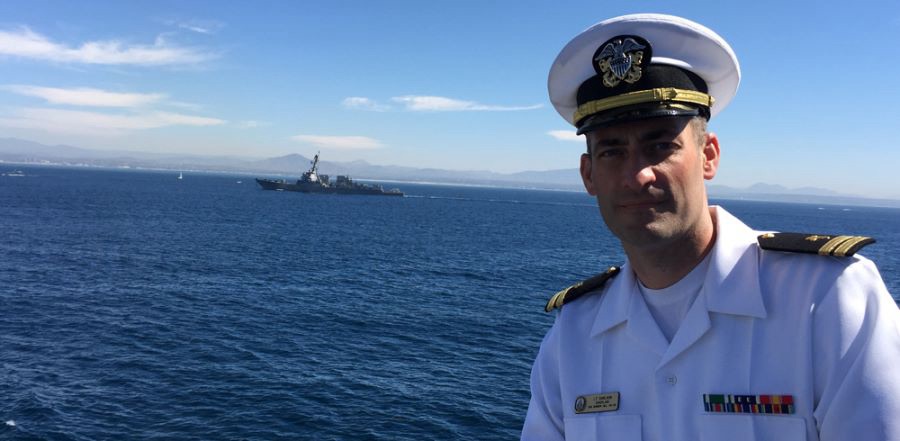
“The second time…the second time he told me a story, about how someone offered him a boat cloak on a cold night. And he said no, he didn’t need it. That he was quite warm. His zeal for King and Country kept him warm. I know it sounds absurd, and were it from another man, you’d cry out: “oh, what pitiful stuff” and dismiss it as mere enthusiasm. But with Nelson… you felt your heart glow.” Captain Jack Aubrey to his Wardroom at Sea. Master & Commander: Far Side of the World
Part 1: Journey to Military Ministry, Leadership Influences, & Call
Chaplaincy runs in my family. I am the son of a retired Army Colonel Chaplain, my younger brother serves as an Army Chaplain at Fort Bragg. This “native” nature of chaplaincy to me means that the calling and privilege to serve are tremendously special. I have firsthand watched men and women of God execute their duties and calling in profound, sacrificial and influential ways. I have also known very ungodly Chaplains who, to put it mildly, were a total risk & detriment to the welfare of those who trusted them to be a person of God in their moments of greatest vulnerability. My dad provided a beautiful example of chaplaincy, as did leaders like CH Colonel Skip LaMertha, CH Colonel Scott McChrystal, and CH Major Sidney Mauldin.
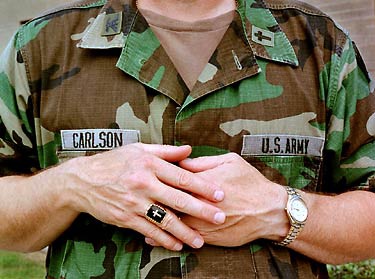
I have detailed at length at other times my journey and call to serve as a Chaplain. My understanding of my initial call, in a nutshell, was that seeing the great need of the next generation of Soldiers in 2005, many headed to war, God had provided me with the right skills, training and preparation, to become a Chaplain. I strongly felt that he was calling me to Chaplaincy. He made it clear that any other Officer Corps that I had thought was more “cool”, such as Intelligence or Surface Warfare, was not it; that the absolute best way I could serve the country following 9/11 was to pick up the baton from my father who had just retired and carry forward the work.
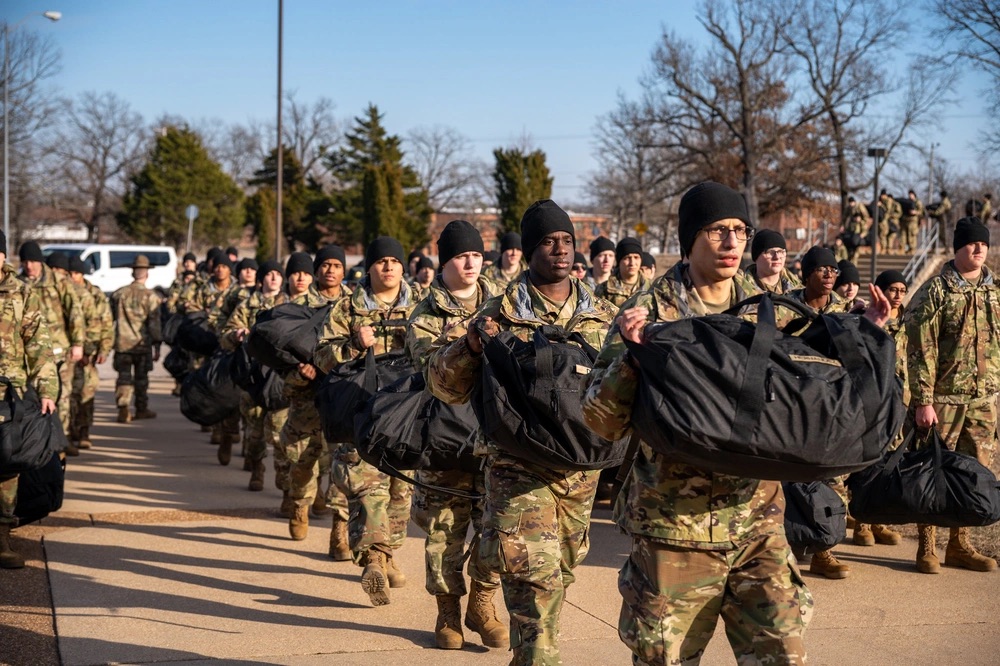
So I volunteered from 2005-2008 as a “troubadour” guitar-playing, vocals singing, weekly worship leader for 500-1000 Basic Trainees from the Third Combat Training Brigade, Fort Leonard Wood, Mo. This work continued to crystallize the clarity of His calling for me. Many from “Fort Wood” were headed directly to combat in Iraq and Afghanistan as truck drivers, combat medics, MPs and Chemical, Biological, Radiological enlisted specialists. And while I didn’t feel as hooah tough as them, I respected them. And time and time again I found that they trusted me, opened their hearts to me, and related to me—all while I consistently shared my life and the Gospel of Jesus with them in most every encounter.
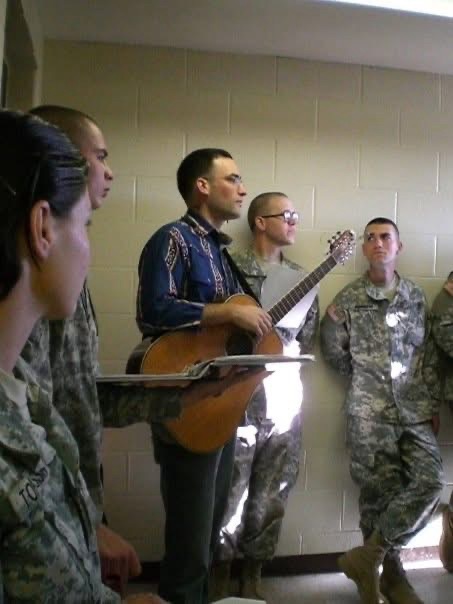

We distributed 7000 Bibles. I went on “Humps”, marches in the field and hills, the Soldiers with full loads of gear, & led weekly devotions before worship practice with Blackaby’s Experiencing God 365 Days devotional.

I want to bring discussion of this calling to the present. I am now, 19 years later, an ordained minister serving with the Assemblies of God as an endorsed Active-Duty Navy Chaplain. I have been walking out the call that I could have had no way to fully realize then when I was 25 years old. My walk with God from a young age, has led me to hold that obedience to His leading for my life- His call- was essential; and the Lord revealed it through the Bible, godly counsel, and the direction of the Holy Spirit. So I believe that even now I am walking in that obedience that first led me to serve as a Chaplain Candidate Program officer, commissioned there at Fort Leonard Wood, an Ensign in 2006.
Today I have a deeper understanding of how my calling intersects with the mission of the Department of Defense. I have made an oath to support and defend the Constitution against all foreign and domestic enemies.

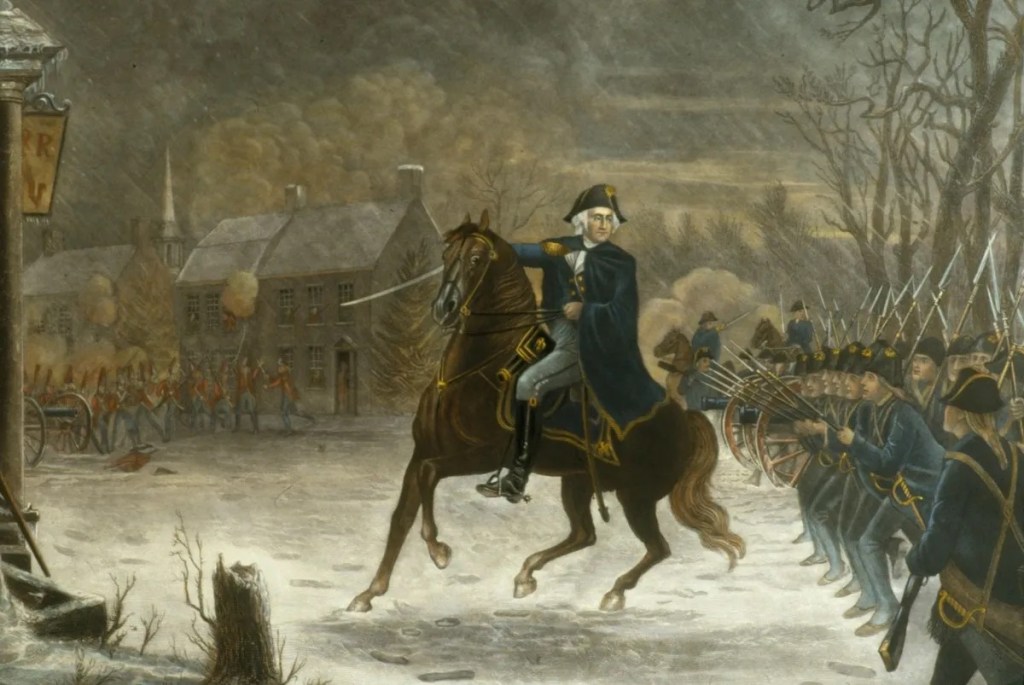
As a Chaplain, I am commissioned, uniquely among other staff officers, to protect the First Amendment right of American warriors to freely exercise their faiths and philosophies at home and at war in austere and dangerous environments. I have joined a cadre of men and women who have done so since 1775 when General Washington and the Colonies’ leaders directed that “Divine Services” be held twice daily aboard warships, and “a sermon on Sundays unless bad weather or other extraordinary accidents prevent.” The Sea Services today continue to earnestly defend American interests and to protect freedom of navigation in all maritime domains.
The Sailors Creed is fitting reminder, “I proudly serve my Navy’s combat team with honor, courage and commitment.” Navy Chaplains come alongside Commanders’ unique mission sets to upbuild Sailors, Marines, Merchant Marines and Coast Guardsmen’s ability to do just that, whether under Sea, at Sea, Air or Land. Many human factors strengthen and assail the resilience of warriors as they seek to serve with honor and dedication. As Chaplain Rear Admiral Carey Cash recently reminded my fellow 900 Navy Chaplains in the February 2025 North Star community publication, our #1 mission is Spiritual Readiness.
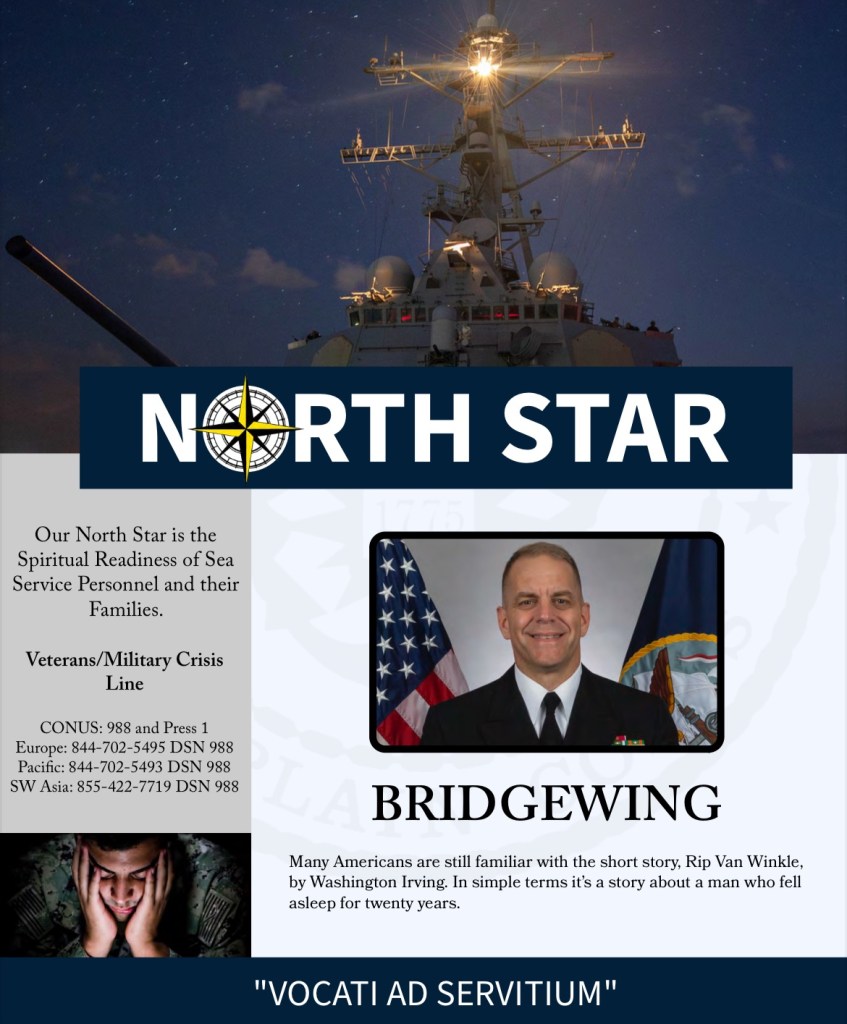
It is to be the man or woman of God who upbuilds “strength of spirit to accomplish the mission with honor.” He shares four Navy-centric vectors of that readiness: connection to the Divine, membership in faith community, seeking meaning, purpose and value, and shared sacrifice for greater good. The USMC Commandant, General Eric Smith’s team, is championing spiritual fitness among Marines, according to RDML Cash, to “leverage these four vectors” and adds “commitment to character and a life of honor”,“response to truth, goodness and beauty” as additional avenues.
I have much to think about regarding my calling now, nearly age 45. A husband, father of two young children, and as a Sailor who has now served five tours, each lasting about 3 years, among Marines, with Sailors aboard the warship USS Bunker Hill, with Naval Special Warfare, and at Navy Medicine’s Hospital Corpsman Schoolhouse. Three deployments to combat zones on land and at sea have refined my understanding of what effective sea services ministry looks like, and now, how I as a mid-level leader in the Navy Chaplain Corps, might best coach, mentor and supervise the next generation of Chaplains coming along. I have done my best to master the tactical arena of Naval Chaplaincy. Now going forward, I will need watch to teams do it. They join me in a tremendously special work. Many will soon serve aboard guided missile destroyers (DDGs). The Chief of Chaplains DDG 51 initiative has already placed about forty Chaplains aboard 74 of the Fleet’s Arleigh Burke Destroyers. Our ministry is a high-risk, high-intensity, challenge as we see clear dangers over the horizon from China; in violent extremist organizations like Hamas and Al Qaeda in the Middle East; Russia’s warring aggression; and here at home with the Cartels, border insecurity, and Latin American dictatorships.
Part 2: Philosophy of Leadership
Shoulder to shoulder with Naval and Marine Officers, I commit to being a man of my word, a person of integrity, a voice for the down-trodden, and a humble servant leader. There are values I will share below that I hold specially dear as a leader in military ministry. I have found them to be essential to effectiveness.
The Chaplain Corps, through Professional Naval Chaplaincy (PNC) has named four specific community values which provide a through line to guarantee unity of effort and a recognized standard. I will lead with these values ever in view: objectivity to ensure fairness and a genuine meritocracy; predictability, so that teams are led with consistency and a stable environment for innovation and excellence; transparency, which is foundational to trust among teammates, to improvement and the “get real, get better” dialogue that the Chief of Naval Operations has directed fleet-wide; shared decision-making, so that through mutual collaboration, all the players can own the wins, build reciprocal respect, and make a joint about-face when efforts do not meet standard and require changes to become mission-enhancing again. (See COCINST INSTRUCTION 5351.1, Professional Naval Chaplaincy Competency Manual)
Metaphors for Supervisory Chaplaincy
“The Dogmas of the Quiet Past are inadequate to the stormy present. The occasion is piled high with difficulty, and we must rise — with the occasion. As our case is new, so we must think anew, and act anew.” President Lincoln’s Annual Address to Congress, December 1862

In the supervisory intermediate leadership role I will be much like a Team Captain, still on the field as an 04, Lieutenant Commander, but also directing efforts. Sometimes, I will need to move to the sidelines to the coaching role. We were cautioned by the Naval Chaplaincy School Commanding Officer Captain Varsogea that “the weak link for our Chaplain Corps (CHC) community is supervision.”
Translation: good intentions from chaplains have often not translated to the elbow grease, sleeves-rolled-up effort, and the intentionality required to lead and develop others within professional naval chaplaincy.
Captain Varsogea went on to explain that “there’s no part of what we do that isn’t your business.” It will be tough, he hammered home the complexity, “you’re always on thin ice now”, explaining how the demands, the nuances of need, the dynamics of advisement place us right at the edge.
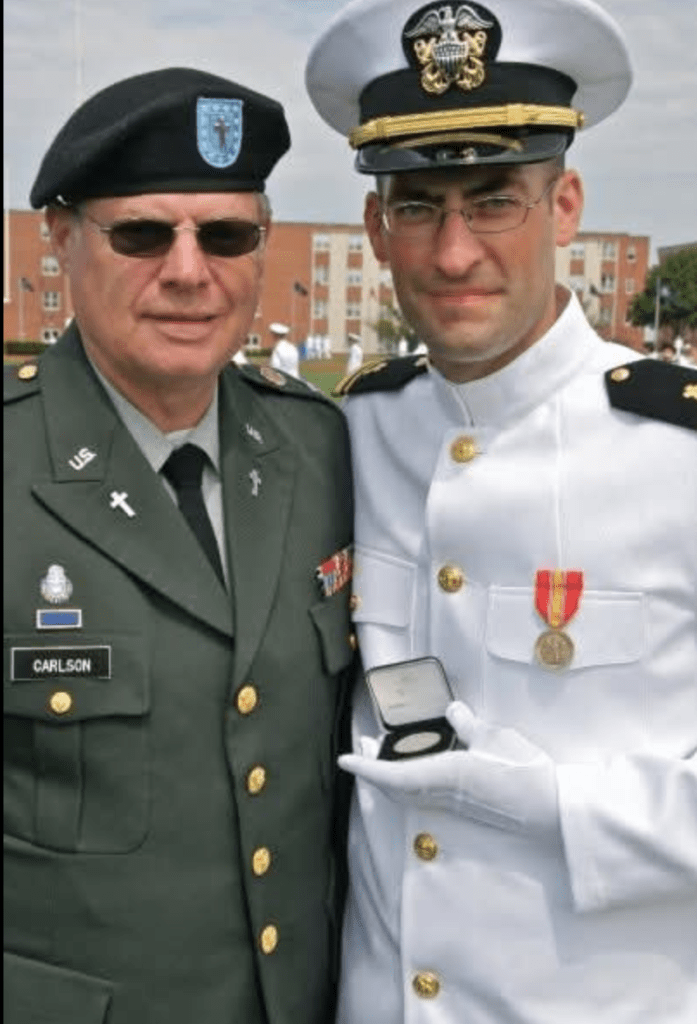
My father, Colonel Harold T. Carlson told me that as a supervisor, “if you will give yourself to your people, they will give themselves to any task. Do not become so focused on the objective that you forget the people who got you there.” He told me to consider the sign often placed on the back of 18 wheelers, “The most important cargo that our truck is carrying is sitting behind the wheel of this rig.”

It’s incumbent on me as a supervisor to respect, value, and protect the people who serve our command on my team.
As I lead, I want to remind my team of the special nature of what we do. Commander Ed Erwin, “The Professor”, said it this way as Course Instructor, to the 15 Intermediate Leadership Course Chaplain Students,
“You carry a great power.”

He was speaking of the trust which people give us to carry and embody God’s very presence and what is Holy, as we touch the most tender areas of their lives. Chaplains are like salt, providing flavor, preservation, and grace without judgment. We are, in the darkness of our mission of killing and defending, a lighthouse shining in the darkness pointing out the shoals (Daniel 12:3 and Philippians 2:15); we are that “City on a Hill.”

Sometimes our work, without God’s help, may feel as heavy as an “Atlas” forced to uphold the world.

My Leadership Values for Effective Military Ministry
What follows is a list of values I have found to be essential ingredients to chaplaincy. I want the Chaplains and RPs whom I serve and lead to understand these facets of leadership, and to see them on display in me.
• Innovation: Flexibility, Adaptability. Being “Semper Gumbi”
• Humor: CAPT Chaplain Rabbi Resnicoff encourages this. “Laughter is good medicine” Hebrew Proverb

• Communication: “What do I know, who needs to know it, have I told them?” This is the counsel that Marine Lt. Col. John Michael Elms taught me in Okinawa as a young LTJG.
Overcommunicate. This is a value of my current director CDR Dr. Rachel Bradshaw.
• Ownership: Taking responsibility for my work, my lanes, my areas of authority as Command Chaplain. Admit error or wrong quickly.
• Courage: Heart, Temerity, and Zeal are crucial to loving Sailors & Marines well and advocating for them to the Command.

• Educators: We are bearers of Naval Heritage and History. The ship’s librarian; often the most educated leader in the room.

• Custodians of the Soul: We are “speakers for the dead” and hold sacred stories of grief and triumph. See Orson Scott Card’s powerful fiction on this, He also authored Ender’s Game.
• We must be ready to humbly serve as the “Nathan,” the moral voice to commanders, urging them to, “Do the right thing as far as you know it,” as CDR Ed Erwin has said.
• Toughness: Hard men and women must do difficult work at all hours and all climes.
Captain Jack from Master and Commander, “My love of country keeps me warm.”
• Love: Jesus wept. “Jesus, come and weep with me awhile”, prepare yourself for deep grief care. Even without clinical training we bring deeply needed LOVE from God to every situation in the Spaces. Many struggles are common to uniformed men and women: Isolation, Insignificance, Deep Loss, Fear, Family Brokenness, Moral Injury, Hardship of Separation, Financial Difficulty, Lack of Identity, Post-Traumatic Stress, Deployment, Helplessness. See TWJ.org
• Inspirational Leadership: we cannot motivate change in others without drawing from a deeper inner well to live and speak in ways that inspire the souls and hearts of others.
• Adaptability: Agile, Hand-Tailored. We must go find the metaphorical largest box of crayons possible -240 Color Crayon Tub- to find the right “color”, so to hand-tailor solutions for Sailors made in God’s image. They are never one size fits all or just a number. While striving to individualize the approach, still be comfortable with an 80% solution if necessary. As GK Chesterton said, “Anything worth doing is worth doing poorly.” Anyone worth serving (and all are) is worthy of our best attempt, even if it fails. The norm of our work is instability of geographic location and uncertainty of operational plans. As one Chaplain said “we must embrace a life of abnormality”

• Advisement: Seek the mentorship and input of trusted line and staff officers. Their work has a daily forcing function of being lashed up to the Commander’s mission writ-large and CO’s intent. The Triad’s current problem set can shift quickly. Knowing the Line’s perspective will help fine tune the Command Religious Program (CRP), so that the Command Chaplain can appropriately message the value of programs and retain buy-in.
• Simplicity: Bring Ockham’s razor to everything. Is there a simpler, more efficient way to accomplish a task, but still remain faithful to commander’s intent, mission, and caring well for people? Be purposeful. Be intentional. We must because time is so precious. The need is so great. We have a calling. We are people of obedience.
• Availability and Acceptance: “Take care of everyone who comes across your way,” Chaplain Mark Thompson.
• Serendipity: a variation of adaptability and flexibility. Recognize the need to shift plans quickly due to Divine Appointments. Case in point, the older woman at the NEX Gas Station yesterday who needed my help airing up her tires. Some of the sweetest moments in ministry have happened to me this way. Some of the very best moments in Chaplaincy begin with a question, “Hey Chaps, do you have a second?”
• Self-Care: Sabbathing is a command and a gift. We are called to play, to rejuvenate through worship, devotion, friendship, solitude alone, and adventure with others.
• Divine Inspiration: God is faithful to provide water to the well. Fresh springs. “Fitly spoken words” to us, to others, and to His people. We will need to draw away, as the early Church apostles, and devote ourselves to fasting and prayer.
• Authority: He has given us Divine Power.
• Prophet’s Reward Rule: Treat a Chaplain like a prophet, receive a prophet’s reward. Do not treat a Chaplain as a Prophet (Holy man or woman) do not receive a prophet’s reward.
• Imago Dei Ministry: “See a face, in our neighbor, as human as our own.” Rabbi Resnicoff, Prayer before US Senate
• Operation Calm Sail: Calm in Chaos “Be the Calm One in the Room.”
• Compassion: Jesus’s love, shown in us, can carry hurting people through tremendous pain.
• Peace in Storm: Legal problems from missteps, when a Commander is fired from loss of confidence, and when ministering to the rare criminal Sailor facing life behind bars.
Lingering Questions and Conclusion
All of this may sound easy. It was first formulated in the safety of temporary assigned duty (TAD) during two weeks at Newport, RI, at the Naval Chaplaincy Schoolhouse. But questions have bubbled up in my heart due to this time of retreat away from the constant demands at my Training Command. Here are some of them:
Has God indeed called me to be a supervisory leader, perhaps an enterprise level executive leader in the next 5-8 years? In many ways, I know I am still more comfortable as an essential advisor and partner to the CO. I gravitate still to the “tactical” chaplaincy of doing over waiting to right-size, right-fit, and empower the persons under my leadership to do it. Granted, I only have a few other chaplains who work for me, and I delegate regularly. A partial answer to the question: I do feel prepared and equipped to lead by my upbringing, experiences in the Navy, and the gifts God has entrusted to me. It will take time, intentionality, and my being mentored to become an excellent supervisor, especially in the administrative aspect of career management for my subordinates.
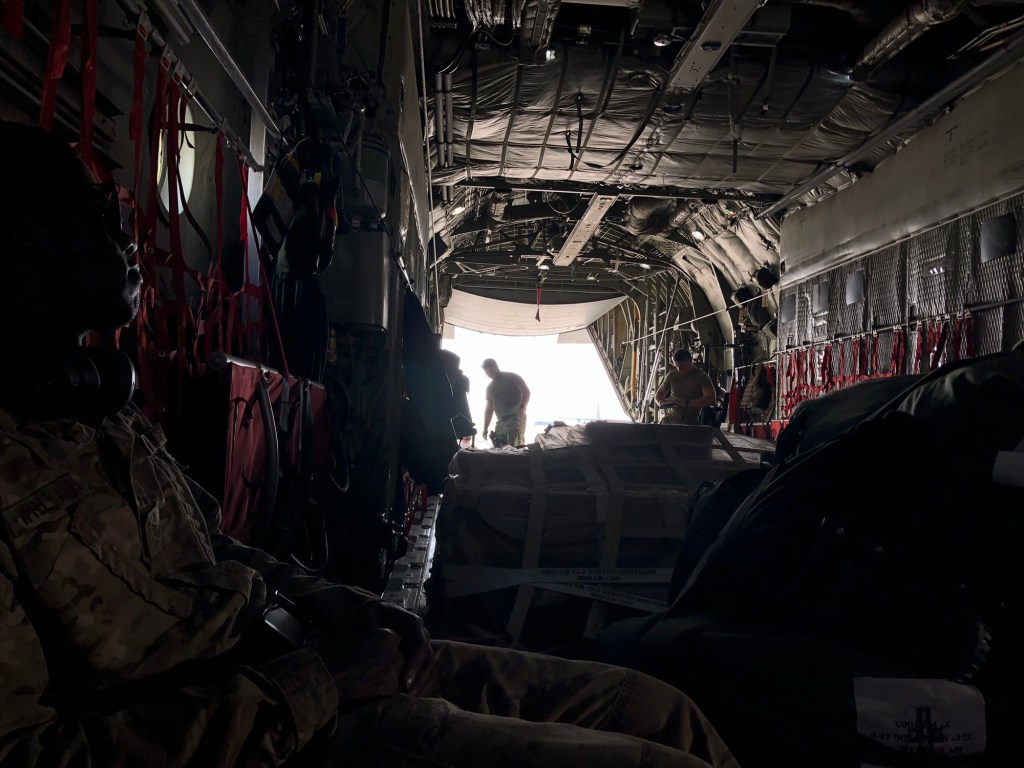
Do I have much preparation serving as a supervisory chaplain? I supervised and inspired a large team of volunteers and the Command at Camp Kinser, in Okinawa. I led the religious ministry for a large, sea combat ready Cruiser, as ship’s shepherd and pastor. I went further into danger and into a punishing environment of intensity with the Navy Seals, won esteem and ministered innovatively to them through weekly 1 page “Chaps Meditations” which I wrote and sent on the classified server. I developed a 20-slide deployment AAR for religious ministry that’s still in use and reaping dividends for NSW chaplains according to a recent Chaplain in the community. I went to many outstation locations within CENTCOM due to rapport built in the SOF unit level training (ULT) workups. Networked extensively and built respect for the CHC within SPECWAR. I was, I pray, a solid team player with fellow chaplains: Todd, Nate, Laura, Stephen, Josh, & John. Take away, I want to protect those whom I serve as coach and mentor as far as they’ll let me. For those of Christian faith, I want to urge them to keep their fire hot for the Lord (Revelation 2).
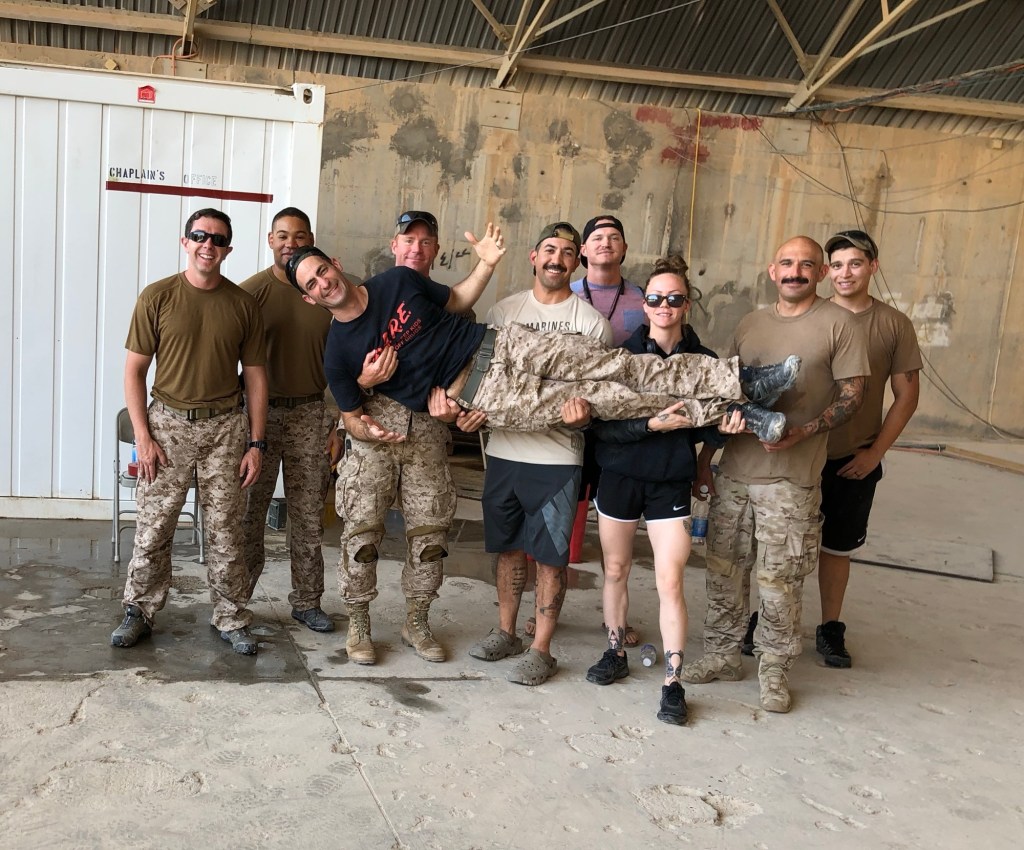
SOTF, IRAQ, OIR Mission
How is it with my soul? What do the people who work for me say about me? A key question came from a Detailer’s brief, he is the Navy Chaplain Corps’ assignments officer: “Is the emotional freight that I carry going to negatively influence those whom I supervise?” I pray I will not project on them my issues.
As a Chaplain, when I leave the room, what do people say? May I “leave a trace” as Commander Madison Carter said, & “enhance the brand.” I want to point them to the King of all Kings. May ego be daily slain and the pride behind it. I will not Edge God Out (EGO). I will fight the immature mindset warned against of “confusing busyness with effectiveness.”
To sustain ministry and military performance I return to the truths of my journey as a Christian, and what’s tattooed upon us by our Religious Organization—in my case, the Assemblies of God Church. This is that “Mary has chosen the better part, and it will not be taken away from her.” For she abided with Jesus, rather than simply working to serve Him, but from a distance, like Martha.
May I trust God for all ministry, past, present and future, for, “No eye has seen, nor ear heard, nor mind conceived what God has prepared for those who love Him” (1 Corinthians 2:9). The ethic of the warfighter, is laid out clearly in Micah 6:8, May I live it: “I have shown thee, Oh man, what is good and what the Lord requires of thee, but to do justly, to love mercy, and to walk humbly with your God.”
“For what purposes does God have for me in Chaplaincy, and now, as a supervisory leader? “Perhaps for this reason, I was brought to (earthly) Kings” (Esther 4:14).
“For such a time as this.” We have a world on the precipice of war, and “here am I, oh Lord, send me.” Isaiah 6:8.
In these truths may I stand, and serve–with every fiber, my Commander, the new joins, warriors, and families of the Sea Services as a devoted, called, prepared and authorized minister of the Gospel of Jesus Christ.
About the Author: LCDR Kristian Carlson is a Navy Chaplain. He has served alongside Marines, Sailors, Soldiers, & Special Forces, and has completed three deployments. In 2020, the Navy sent him to Duke University’s Divinity School to earn a specialized Master’s Degree, ThM, in Pastoral Care, where he focused his studies on challenges facing Active Duty personnel, Veterans and their families. His specific areas of interest include care for persons with Complex Trauma, strategies for healing from PTSD, Moral Injury, & mild TBI. A key personal mission of his is to leverage the strengths of faith-based Veteran Service Organizations as strategic partners to chaplains, the VA, and the DoD in their ongoing resiliency & suicide prevention initiatives. He is married to his Chilean sweetheart, Damaris. They have two young children, who are the delight of their hearts.
https://news.ag.org/en/article-repository/news/2019/01/carrying-on-the-chaplain-tradition
https://thewarriorsjourney.org/challenges/sling-shot-baby-isak/
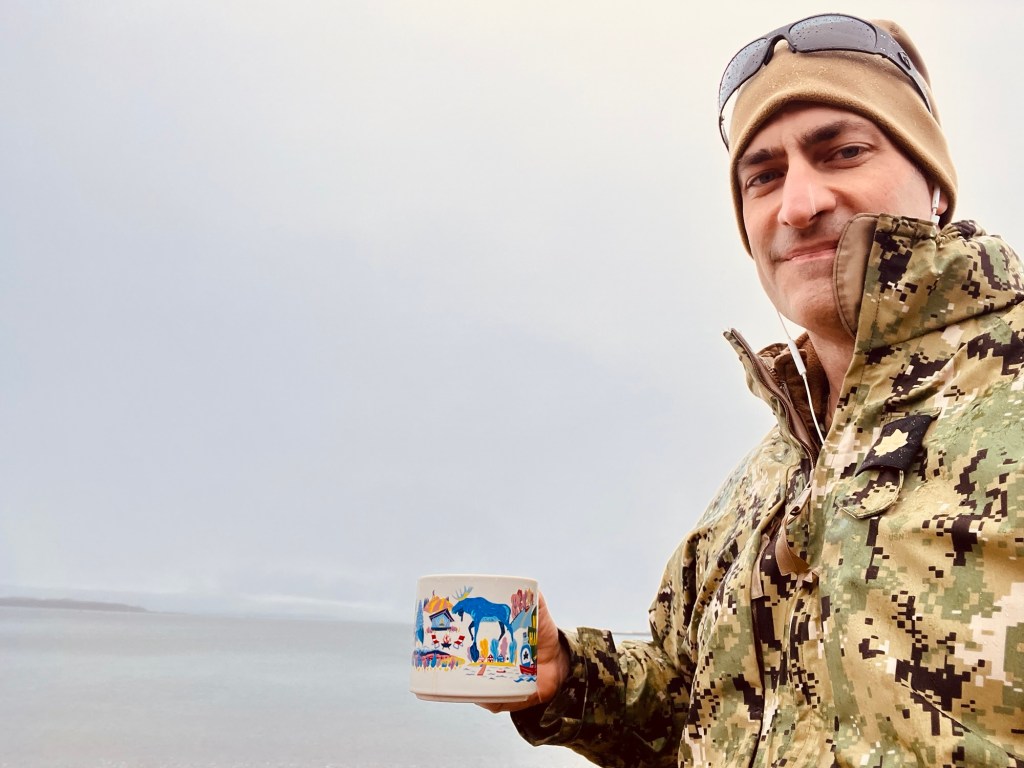
 Kristian Carlson
You must be logged in to post a comment.